
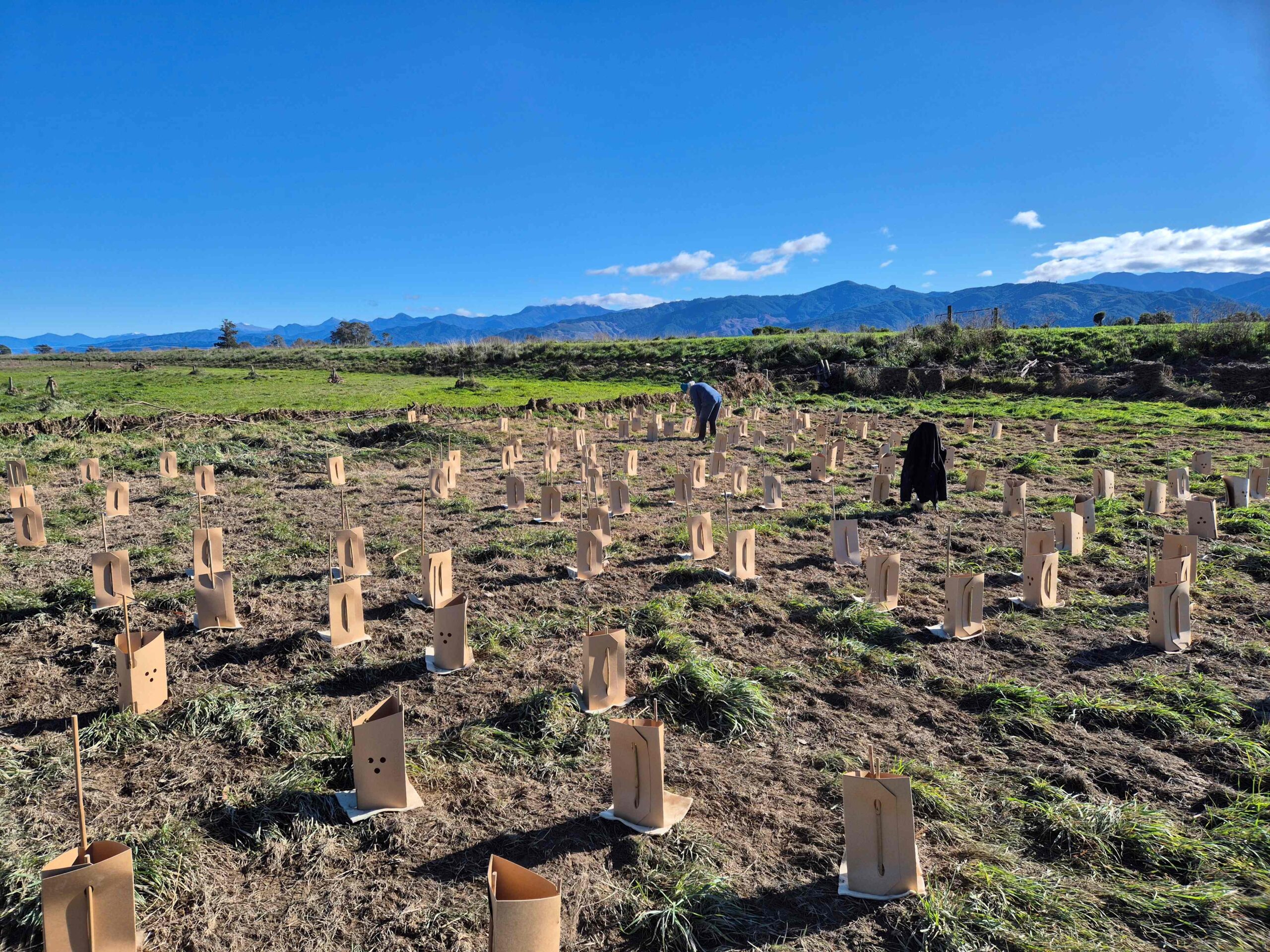
The past few weeks have been an emotional rollercoaster for the Wairau Nature Network.
It began with an incredible high. Over two community planting days, 240 volunteers came together to establish 1,100 native trees at our new Thomsons Ford Reserve demonstration site. The energy, enthusiasm and generosity of everyone involved was inspiring, and together we created the beginnings of what will become a thriving example of community-led ecological restoration.
Just three weeks later, disaster struck.
A one-in-15-year flood tore through the reserve, leaving a trail of destruction in its wake. Seeing the site devastated after so much hard work and aroha was heartbreaking. I have to admit, I cried when I first saw the damage.
But as we looked more closely, there was hope. Although every single plant guard had been swept downstream, around 800 of the trees had survived. Many had lost the soil around their roots and were buried beneath flood debris, but they were still there.
We put out a call for help, and once again our community stepped up. Eighteen dedicated volunteers joined us over two working bees to rescue and re-establish the planting. We also received incredible support from Advance Landscape Systems, who generously supplied replacement guards and weed mats at a heavily discounted price. To top it off, we managed to recover a couple of hundred of the original mats and stakes that had become tangled in downstream fences.
Restoration is never easy. Nature constantly reminds us that there are no guarantees, and climate-driven extreme weather events are making the work even more challenging. Yet these moments also reveal something just as powerful—the resilience of both nature and our community.
The flood may have knocked us back, but it hasn’t changed our commitment. If anything, it has strengthened it. We are incredibly grateful to everyone who has rolled up their sleeves to help restore the site, and we look forward to watching these trees continue to grow for years to come.
Giving up has never been an option. Together, we’ll keep restoring, learning and building a more resilient landscape.