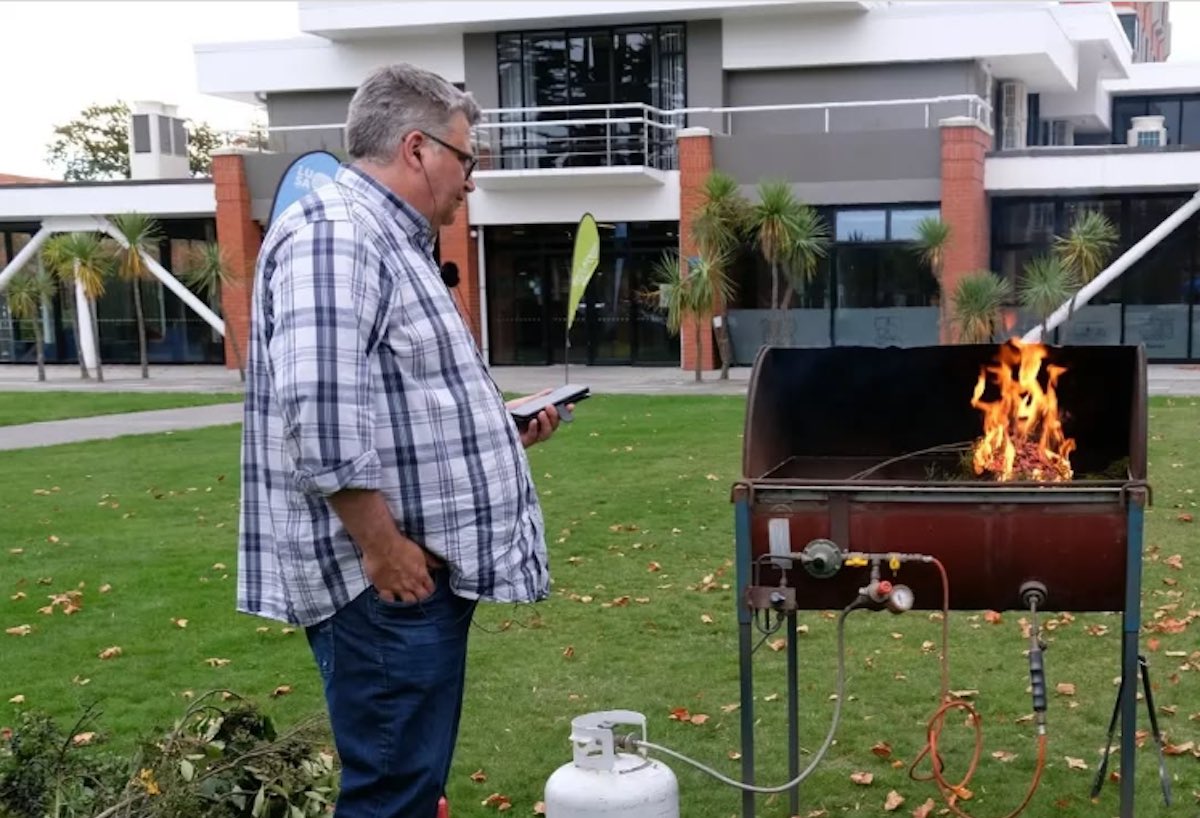
Can a firebreak also deliver biodiversity, flood resilience, and landscape amenity? The Wairau Nature Network is answering this at Thomsons Ford Reserve. By establishing a 10m green break, the team is testing how low-flammability native species can replace flammable nurse plants like kānuka to reduce wildfire risks near urban areas.
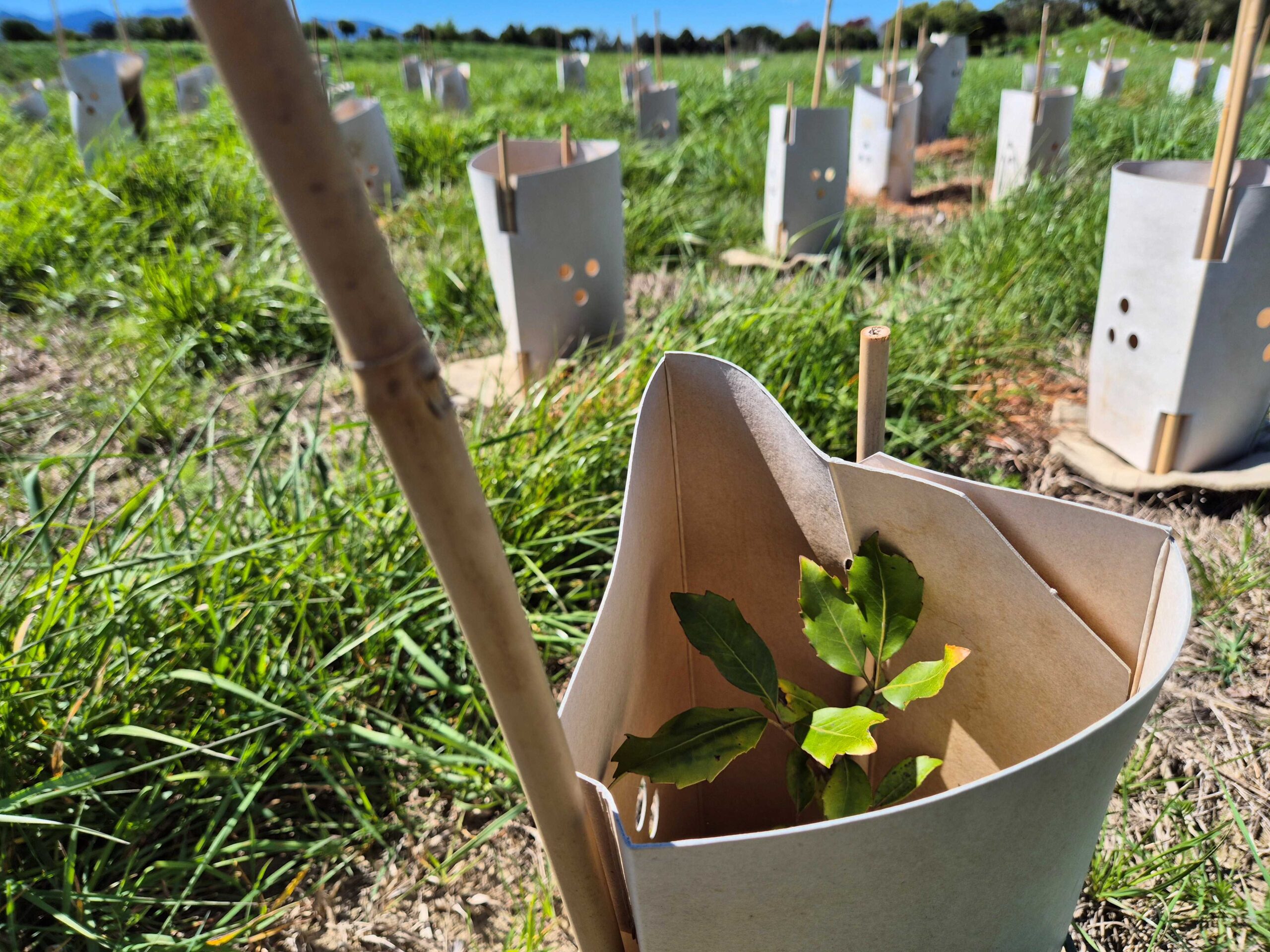
In winter, volunteers densely planted 1000 eco-sourced trees of marbleleaf, lancewood, five finger, karamū, and kanono. The strategy uses moisture-retentive plants with supple leaves to build a dense canopy that reduces fuel and acts as a “spark-arrestor”. All trees were fitted with cardboard guards and EcoWool mats, and larger-leaved species received frost-protection spray.
Just three weeks later, the project faced a set-back: the Opaōa River surged from under 1 m³/s to over 400 m³/s in six hours, stripping topsoil, exposing roots, and sweeping away guards, followed shortly by heavy frosts. Volunteers rallied within three days to rescue and replant roughly 75% of the trees.
Despite the chaotic start, observations are promising. Marbleleaf achieved 100% survival, while lancewood, karamū, five finger, and a few donated wineberry showed impressive resilience. Only kanono struggled, proving it requires an established canopy to protect it from frost. Unprotected plants suffered higher losses, highlighting frost spray (~5c per tree) and guards as vital establishment tools.
We recommend that in high fire-risk areas, landowners consider protecting infrastructure and forest fragments with a green firebreak, and that all restoration practioners increase the proportion of low flammabily species in their planting mix.
Read the full report.