
Microforest & Biochar workshop, May 2025
Author
Wendy
Date Published
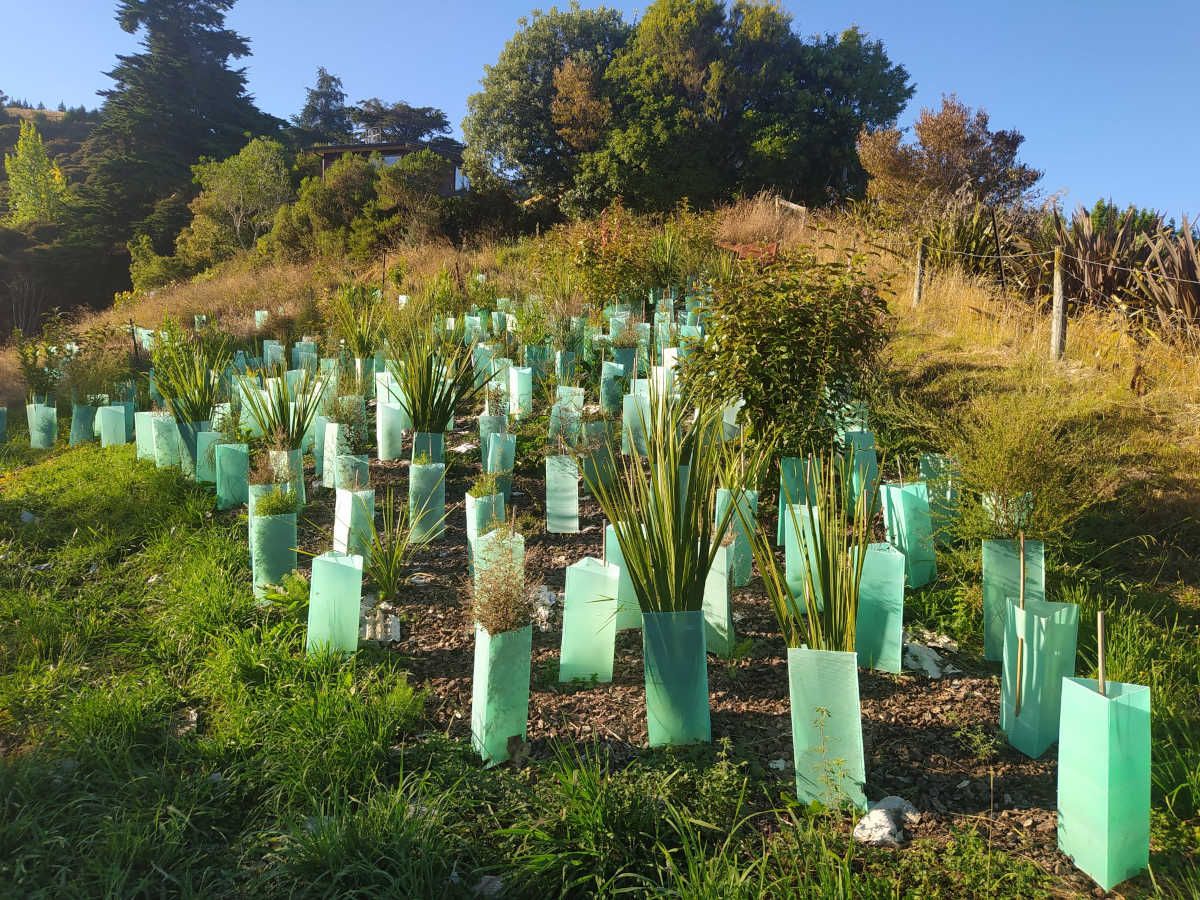
38 people attended a Microforest and Biochar forest, with guest speaker Asita Langi from Nelson Whakatu Microforest Initiative.
What is a microforest? Often no bigger than a tennis court, microforests are small, multi-layered planted forests that serve as carbon stores and biodiversity stepping stones. Because they are small they are ideal for schools, businesses, industrial areas and unproductive rural land.
While small, microforests are planted with more species than traditional restoration sites, and incorporate the layers of the forest. This is called the Miyawaki Technique, after the Japanese ecologist who designed the methodology.
“For a natural plant community (society), the best situation is where the plants compete with each other and have to put up with each other. Our method of planting trees followed the law of the forest, and seedlings whose roots had filled the pot were planted, different species mixed together. In a natural forest, between 30 and 50 seedlings sprout per square meter. There are some places in Borneo where there are between 500 and nearly 1,000 seedlings per square meter [sic].“ – Akira Miyawa
Asita also discussed how biochar was incorporated into the Nelson Whakatu Microforest and significantly improved soil water and nutrient retention. The photos of the four-year-old growth impressed even the most hardened critic in the room!